Went to Goodwill with part of my family tonight to look for Halloween costumes. It's the first Halloween we're hitting the streets, ever, and the reason for the change is "Tract-and-Treating". We're going out tomorrow night with armloads of Bible-laced candy to reach neighbors in their houses. Only I never settled on a costume. Instead, I made off with some new books:
The NY Public Library Science Desk Reference (1995)
Soren Kierkegaard, Fear and Trembling
Laurence Sterne, Tristram Shandy
Ernest Hemingway, For Whom the Bell Tolls
I could have got the new verse translation of Sir Gawain and the Green Knight, but I thought I might already have it in my Norton Anthology. I'll have to check. For Whom the Bell Tolls is copyright 1940, but it's a reprint by Blakiston, not the first edition by Scribners. Oh well... I hope it's good, anyway. Andrew Pudewa once said it's a clever title for a dull book. Lesson: the value of a book is in its content, not in its covers.
Digression: how far can I go in writing like Tristram, and how far should I?
Friday, October 30, 2009


Friday, January 16, 2009
Doctrine Challenge: Original Sin 2
I fell off the band wagon. (This means I didn't post yesterday.) Last night was apologetics meeting; before I was reading whatever traces remained online of Shane Claiborne's scurrilous book Jesus For President... and also mining newspaper editors' email addresses for sending out the Come What May press release. I was kicking myself for not checking the deadlines weeks ago. Then after apologetics, I zonked out on the floor in front of the fire... and then woke up and went to bed at 12:30. No lesson, except that making excuses is as old as the original sin. "This woman you gave me..."
This morning I unknowingly slept in till 7 something. I came down at the call to "take care of email x for person y"... and found Dad making soup for breakfast. It was my job, but he bailed me out.
Today I sent out press releases to 13+ newspapers in the Portland area. Not bad once you get into a routine. Made arrangements for this, that, and the other thing related to the CWM event. Went to choir practice in the evening. Did some more editing, since we need to get an email blast out for an organization tomorrow morning.
And I made orange peel granola. It's in the oven right now. Laura and Teresa will be proud of me.
Lesson: Adam sinned and we suffer the consequences. He slept on his watch, and we all wake up dead in sin. Even while we were oblivious, though, Christ died for us. His life-sustaining power enables us to sustain others.
This morning I unknowingly slept in till 7 something. I came down at the call to "take care of email x for person y"... and found Dad making soup for breakfast. It was my job, but he bailed me out.
Today I sent out press releases to 13+ newspapers in the Portland area. Not bad once you get into a routine. Made arrangements for this, that, and the other thing related to the CWM event. Went to choir practice in the evening. Did some more editing, since we need to get an email blast out for an organization tomorrow morning.
And I made orange peel granola. It's in the oven right now. Laura and Teresa will be proud of me.
Lesson: Adam sinned and we suffer the consequences. He slept on his watch, and we all wake up dead in sin. Even while we were oblivious, though, Christ died for us. His life-sustaining power enables us to sustain others.
Tuesday, January 13, 2009
Doctrine Challenge: Original Sin 1

This morning I got a surprise IM from Jon Winslow, with a challenge to meditate on and live out just one doctrine for one week. He badgered me so, that after thinking it over, I remembered signing up to teach about Original Sin at next week's apologetics meeting. That gives me eight days to learn it and apply it.
My first thoughts on original sin:
"To remain in Adam all die, so in Christ, eternal life is nigh." If Adam didn't represent us all in bringing sin into the world by his disobedience, then how could Jesus represent us all in bringing salvation by his perfect obedience? Why would he need to bring it to us all, if our inherent badness wasn't so universally inherent?
My sister Teresa recommended I read Shane Claiborne's book Jesus for President. I ordered it from the library, so I should be reading it in a few days. In the meantime, though, I read his four appendices off of http://jesusforpresident.org. Eventually I found an excellent response/review/critique to that book and Claiborne's previous book The Irresistible Revolution by Tim Ragsdale.
Ok, the guy's a nut. He's a hippy, a liberal, near-Marxist peace-and-love radical non-resistant Christian. I suppose his stuff is related to Original Sin because he thinks true disciples have to fight poverty on systemic levels and individual levels, as an evil. What's really missing, though, is personal responsibility. Everybody has to find out that they are spiritually bankrupt before they enter the kingdom of heaven. Until that happens, you can tear down the rich all you want and it will still be a zero-sum game.
Yesterday I needed to find out the legality of drawing chalk art on public sidewalks in Portland. According to the Portland Porcupine site, it's usually ok because it's not permanent. It can be a great tool for education or protest when used against abortion. I did hours of research, compiling laws upon regulations upon guidelines upon news articles. It has been done before, but technically it could fall unde
From this I gather that knowledge of Original Sin, and experience with its universal effects, makes people quite suspicious of others. Marcia just didn't want me to cost her extra time cleaning up graffiti
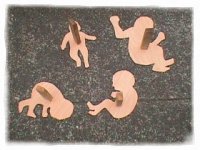 because of the information I got from her. Well… outlines of infants on the sidewalks of an abortuary will at least give you something cute to look at as you scrub them away.
In review:
1. Adam's Original Sin established all of humanity in a state of spiritual and moral destitution.
2. In the same way, Christ's obedience established all (redeemed) humanity as beneficiaries of grace and righteousness.
3. Original Sin means your problems are inside you, not in the system. You could have the perfect conditioning, and still be a fool, just because of inherited sin nature.
4. Experiencing the universal effects of Original Sin makes us mistrust others.

I just broke out some books that might help on this topic:
Jonathan Edwards, The Doctrine of Original Sin... in Works V.1

John Piper, When I don't Desire God
John Piper, The Justification of God
Hopefully, I'll get some answers from these.

Monday, December 22, 2008
The Woman's Cause is Man's
Tennyson wrote a long, epic poem called The Princess. Within it, there is a section where the prince is trying to woo the princess, after she had failed in her experiment at starting a feminist girls-only school. The prince made this speech. I came across it while I was studying for the GRE Lit. in English exam in the Norton Anthology of E. L. (major authors one-vol. edition). It represents a high-flown but well-conceived view of male-female complementarity and points out that the way to stop sexist oppression or victimization in society by either gender, is through a harmonious marriage. Marriage is where one supports the other, the other protects the one. And together, because they are different, their union makes more progress than they could on their own. This kind of lifestyle means more than feminist or chauvinist theorizing, protesting, litigating, or book-writing (although Tennyson did write a book).
'Blame not thyself too much,'I said, 'nor blame
Too much the sons of men and barbarous laws;
These were the rough ways of the world till now.
Henceforth thou hast a helper, me, that know
The woman's cause is man's: they rise or sink
Together, dwarfed or godlike, bond or free:
For she that out of Lethe scales with man
The shining steps of Nature, shares with man
His nights, his days, moves with him to one goal,
Stays all the fair young planet in her hands--
If she be small, slight-natured, miserable,
How shall men grow? but work no more alone!
Our place is much: as far as in us lies
We two will serve them both in aiding her--
Will clear away the parasitic forms
That seem to keep her up but drag her down--
Will leave her space to burgeon out of all
Within her--let her make herself her own
To give or keep, to live and learn and be
All that not harms distinctive womanhood.
For woman is not undevelopt man,
But diverse: could we make her as the man,
Sweet Love were slain: his dearest bond is this,
Not like to like, but like in difference.
Yet in the long years liker must they grow;
The man be more of woman, she of man;
He gain in sweetness and in moral height,
Nor lose the wrestling thews that throw the world;
She mental breadth, nor fail in childward care,
Nor lose the childlike in the larger mind;
Till at the last she set herself to man,
Like perfect music unto noble words;
And so these twain, upon the skirts of Time,
Sit side by side, full-summed in all their powers,
Dispensing harvest, sowing the To-be,
Self-reverent each and reverencing each,
Distinct in individualities,
But like each other even as those who love.
Then comes the statelier Eden back to men:
Then reign the world's great bridals, chaste and calm:
Then springs the crowning race of humankind.
May these things be!'
Sighing she spoke 'I fear
They will not.'
'Dear, but let us type them now
In our own lives, and this proud watchword rest
Of equal; seeing either sex alone
Is half itself, and in true marriage lies
Nor equal, nor unequal: each fulfils
Defect in each, and always thought in thought,
Purpose in purpose, will in will, they grow,
The single pure and perfect animal,
The two-celled heart beating, with one full stroke,
Life.'
And again sighing she spoke: 'A dream
That once was mind! what woman taught you this?'
'Blame not thyself too much,'I said, 'nor blame
Too much the sons of men and barbarous laws;
These were the rough ways of the world till now.
Henceforth thou hast a helper, me, that know
The woman's cause is man's: they rise or sink
Together, dwarfed or godlike, bond or free:
For she that out of Lethe scales with man
The shining steps of Nature, shares with man
His nights, his days, moves with him to one goal,
Stays all the fair young planet in her hands--
If she be small, slight-natured, miserable,
How shall men grow? but work no more alone!
Our place is much: as far as in us lies
We two will serve them both in aiding her--
Will clear away the parasitic forms
That seem to keep her up but drag her down--
Will leave her space to burgeon out of all
Within her--let her make herself her own
To give or keep, to live and learn and be
All that not harms distinctive womanhood.
For woman is not undevelopt man,
But diverse: could we make her as the man,
Sweet Love were slain: his dearest bond is this,
Not like to like, but like in difference.
Yet in the long years liker must they grow;
The man be more of woman, she of man;
He gain in sweetness and in moral height,
Nor lose the wrestling thews that throw the world;
She mental breadth, nor fail in childward care,
Nor lose the childlike in the larger mind;
Till at the last she set herself to man,
Like perfect music unto noble words;
And so these twain, upon the skirts of Time,
Sit side by side, full-summed in all their powers,
Dispensing harvest, sowing the To-be,
Self-reverent each and reverencing each,
Distinct in individualities,
But like each other even as those who love.
Then comes the statelier Eden back to men:
Then reign the world's great bridals, chaste and calm:
Then springs the crowning race of humankind.
May these things be!'
Sighing she spoke 'I fear
They will not.'
'Dear, but let us type them now
In our own lives, and this proud watchword rest
Of equal; seeing either sex alone
Is half itself, and in true marriage lies
Nor equal, nor unequal: each fulfils
Defect in each, and always thought in thought,
Purpose in purpose, will in will, they grow,
The single pure and perfect animal,
The two-celled heart beating, with one full stroke,
Life.'
And again sighing she spoke: 'A dream
That once was mind! what woman taught you this?'
Tuesday, July 15, 2008
Notes from Church campout
Here's my first post here in a long time... this Sunday my family and I went to the HoFCC church campout at Metzler park somewhere down by Molalla. It's an hour and a half drive and it was hard to sleep in the van. Anyway, Nathan Garvey preached from the story of how Absalom met his death at the hand of Joab and his men in 2 Sam. 19.
Nathan focused on the consistent pride and arrogance of both Absalom and Joab.
"Pride is rebellion against, and unbelief in, God's sovereign will.
Humility is obedience to, and trust in, God's sovereign will."
"Until we understand the effect and consequences of our pride, we'll never understand the value and significance of the cross."
Nathan focused on the consistent pride and arrogance of both Absalom and Joab.
"Pride is rebellion against, and unbelief in, God's sovereign will.
Humility is obedience to, and trust in, God's sovereign will."
"Until we understand the effect and consequences of our pride, we'll never understand the value and significance of the cross."
Tuesday, June 05, 2007
Books I've added to my library recently:
Ibsen, Henrik. Four Major Plays
Cawley, A.C. (ed.) Everyman and Medieval Miracle Plays
Willey, Basil. The Seventeenth Century Background
Albee, Ernest. A History of English Utilitarianism
O'Neill, Eugene. The Later Plays of Eugene O'Neill
Smith, Henry Nash. Virgin Land: the American West as symbol and myth
Marlow, Christopher. The Tragedy of Doctor Faustus
Bunyan, John. The Pilgrim's Progress
Latest theological reading:
John Calvin, Institutes 3.19 "Christian liberty"
Institutes 4.13 "Vows"
Martin Luther, "Introduction to Romans"
Treatise on Christian Liberty
Ibsen, Henrik. Four Major Plays
Cawley, A.C. (ed.) Everyman and Medieval Miracle Plays
Willey, Basil. The Seventeenth Century Background
Albee, Ernest. A History of English Utilitarianism
O'Neill, Eugene. The Later Plays of Eugene O'Neill
Smith, Henry Nash. Virgin Land: the American West as symbol and myth
Marlow, Christopher. The Tragedy of Doctor Faustus
Bunyan, John. The Pilgrim's Progress
Latest theological reading:
John Calvin, Institutes 3.19 "Christian liberty"
Institutes 4.13 "Vows"
Martin Luther, "Introduction to Romans"
Treatise on Christian Liberty
Tuesday, May 29, 2007
Futility
Psalm 78 has a terrible warning. Speaking of the Hebrews in the desert of Zin, it says,
32 In spite of all this, they kept on sinning;
in spite of his wonders, they did not believe.33 So he ended their days in futility
and their years in .
Futile days pass when no great purpose commands them. The years they constitute are terrifying when they are ended and nothing left but God's wrath. Save me from them. Remove the back-brace of unbelief.
Genesis 16 - Hagar
Since returning from Journey to the Heart in early April, I have had a project. The project is to scrawl out the "book of the Law" (Genesis through Deuteronomy) in composition notebooks. Today's chapter was Genesis 16, about Sarai's maidservant Hagar, whom she gave to Abram to produce a child, since God had closed up Sarai's womb.
Abram was the man who believed God's promise of a son from his own body, so that God credited his faith as righteousness, in chapter 15. He, at age 85, went along with the idea.
You might say God was showing his kindness and faithfulness to Abram's descendants (Ishmael). But it shows me that God is not a petty tribal deity in the book of Genesis. He takes note of the helpless everywhere, and -- reveals himself. Does he always? I don't know, because I only have my own experience and what's recorded in the Bible. God must somehow show his glorious attributes in everything he does, and the helpless should know that he is their shield.
He was a shield for Hagar, even though she was an Egyptian slave woman. He was a shield for Job, who lived in the land of Uz. He was worshiped by Melchizedek, king of Salem, and by Abimelech king of the Philistines at Gerar. There was nothing even special about Abram: he came from the land of the Chaldeans (Babylonians).
So does God still love the Arabs (Ishmaelites)? Yes, God still loves the Arabs.
Question 2: Why did the angel tell Hagar to go back to Sarai?
Bringing her back under authority, even a cross old lady, was part of God's mercy.
Here's the rest of the angel's message.
1 Now Sarai, Abram's wife, had borne him no children. But she had an Egyptian maidservant named Hagar; 2 so she said to Abram, "The LORD has kept me from having children. Go, sleep with my maidservant; perhaps I can build a family through her."
Abram was the man who believed God's promise of a son from his own body, so that God credited his faith as righteousness, in chapter 15. He, at age 85, went along with the idea.
Hagar got 'uppity' around Sarai, because even though her was to build a family though her son, Sarai herself would be the last of her line, supplanted by Hagar.
Abram agreed to what Sarai said. 3 So after Abram had been living in Canaan ten years, Sarai his wife took her Egyptian maidservant Hagar and gave her to her husband to be his wife. 4 He slept with Hagar, and she conceived.
So Hagar fled. I don't know what Sarai wanted (except a child), but she is ruining one thing after another.
When she knew she was pregnant, she began to despise her . 5 Then Sarai said to Abram, "You are responsible for the wrong I am suffering. I put my servant in your arms, and now that she knows she is pregnant, she despises me. May the LORD judge between you and me."6 "Your servant is in your hands," Abram said. "Do with her whatever you think best." Then Sarai mistreated Hagar; so she fled from her.
One question has been rolling around in my brain like a rock since dinner-time: Why did God have pity on Hagar?7 The angel of the LORD found Hagar near a spring in the desert; it was the spring that is beside the road to Shur. 8 And he said, "Hagar, servant of Sarai, where have you come from, and where are you going?"
"I'm running away from my Sarai," she answered.9 Then the angel of the LORD told her, "Go back to your and submit to her." 10 The angel added, "I will so increase your descendants that they will be too numerous to count."
You might say God was showing his kindness and faithfulness to Abram's descendants (Ishmael). But it shows me that God is not a petty tribal deity in the book of Genesis. He takes note of the helpless everywhere, and -- reveals himself. Does he always? I don't know, because I only have my own experience and what's recorded in the Bible. God must somehow show his glorious attributes in everything he does, and the helpless should know that he is their shield.
He was a shield for Hagar, even though she was an Egyptian slave woman. He was a shield for Job, who lived in the land of Uz. He was worshiped by Melchizedek, king of Salem, and by Abimelech king of the Philistines at Gerar. There was nothing even special about Abram: he came from the land of the Chaldeans (Babylonians).
So does God still love the Arabs (Ishmaelites)? Yes, God still loves the Arabs.
Question 2: Why did the angel tell Hagar to go back to Sarai?
Bringing her back under authority, even a cross old lady, was part of God's mercy.
Here's the rest of the angel's message.
11 The angel of the LORD also said to her:
"You are now with child
and you will have a son.
You shall name him Ishmael, [a]
for the LORD has heard of your misery.12 He will be a wild donkey of a man;
his hand will be against everyone
and everyone's hand against him,
and he will live in hostility
toward [b] all his brothers."
I don't get what's so desirable about being a wild donkey. Maybe it ensures that, like Esau, you won't stay under anyone's domination. (By the way, Ishmael means 'God hears'.)
13 She gave this name to the LORD who spoke to her: "You are the God who sees me," for she said, "I have now seen [c] the One who sees me." 14 That is why the well was called Beer Lahai Roi [d] ; it is still there, between Kadesh and Bered.
P.S.
15 So Hagar bore Abram a son, and Abram gave the name Ishmael to the son she had borne. 16 Abram was eighty-six years old when Hagar bore him Ishmael.
Saturday, December 09, 2006
Constant love needs an eternal end
Nehemiah 9:32-33
"Now therefore, O our God, the great, mighty and awesome God, who keeps his covenant of love, do not let all this hardship seem trifling in your eyes--the hardship that has come upon us, upon our kings and leaders, upon our priests and prophets, upon our fathers and all your people, from the days of the kings of Assyria until today. In all that has happened to us, you have been just; you have acted faithfully, while we did wrong."
Eliz. Barret Browning, Sonnets from the Portuguese XIV
If thou must love me, let it be for nought Except for love's sake only. Do not say I love her for her smile--her look--her way Of speaking gently,--for a trick of thought That falls in well with mine, and certes brought A sense of ease on such a day -- For these things in themselves, Belovèd, may Be changed, or change for thee,--and love, so wrought, May be unwrought so. Neither love me for Thine own dear pity's wiping my cheek dry,-- A creature might forget to weep, who bore Thy comfort long, and lose thy love thereby! But love me for love's sake, that evermore Thou may'st love on, through love's eternity.
"Now therefore, O our God, the great, mighty and awesome God, who keeps his covenant of love, do not let all this hardship seem trifling in your eyes--the hardship that has come upon us, upon our kings and leaders, upon our priests and prophets, upon our fathers and all your people, from the days of the kings of Assyria until today. In all that has happened to us, you have been just; you have acted faithfully, while we did wrong."
Eliz. Barret Browning, Sonnets from the Portuguese XIV
We love because He first loved us
Elizabeth Barret Browning, Sonnets from the Portuguese XII
Indeed this very love which is my boast, And which, when rising up from breast to brow, Doth crown me with ruby large enow To draw men's eyes and prove the inner cost,-- This love even, all my worth, to the uttermost, I should not love withal, unless that thou Hadst set me an example, shown me how, When first thine earnest eyes with mine were crossed, And love called love. And thus, I cannot speak Of love even, as good thing of my own: Thy soul hath sn@tched up mine all faint and weak, And placed it by thee on a golden throne,-- And that I love (O soul, we must be meek--) Is by thee only, whom I love alone.
Tuesday, November 21, 2006
Copper price graphs


Graphics:
From London Metals Exchange website, http://www.lme.co.uk/dataprices_pricegraphs.asp
Price graph with values: copper, Jan. 1 2001-Nov. 21 2006, 3 months buyer contract.
Price graph with values: copper, Jan. 1-Nov. 21 2006, 3 months buyer contract.
Copper 3-months buyer contracts on LME
Monday, August 07, 2006
Current reading

Right now I'm reading:
Reclaiming Surrendered Ground by Jim Logan
The New Testament (last read 1 Thess.)
Friday, July 21, 2006
I pray that out of his glorious riches, He may strengthen you with power through his Spirit in your inner being, so that Christ may dwell in your hearts through faith. And I pray that you, being rooted and established in love, may have power, together with all the saints, to grasp how wide and long and high and deep is the love of Christ, and to know this love that surpasses knowledge -- that you may be filled to the measure of all the fullness of God.
Ephesians 3:16-19
This morning I go in for my CLA exam. Two ninety-minute tests today, and three tests tomorrow. If you read this, pray that I will be calm during the tests, and remember the important things, and manage time well. Today's tests are partly composed of hand-written essays (legal memoranda), which are a great challenge. But why should I worry? It's for my good, whether I pass or not.
Ephesians 3:16-19
This morning I go in for my CLA exam. Two ninety-minute tests today, and three tests tomorrow. If you read this, pray that I will be calm during the tests, and remember the important things, and manage time well. Today's tests are partly composed of hand-written essays (legal memoranda), which are a great challenge. But why should I worry? It's for my good, whether I pass or not.
Thursday, June 29, 2006
Distant friendship and internet discourse
I've been intrigued by the Rebelution's new post about cell phone use and misuse, since I can speak philosophically from much experience with related subjects. I commented thus:
In one way, ubiquitous cell phone use decreases responsible independency: if you're always asking someone else's opinion, you won't make judgment calls on your own.
I don't use a cell phone, although my parents do. I've never had txting; I ran the IM run-around the last year I did debate, mostly to communicate with my partner who lived too far away to visit often. It became addicting, and I'm glad to leave it alone (as I'm sure you are too, Brett). Lonely people use IM like they do email to look for affirmation and companionship; they don't really want to give it unless it is necessary for the above goal, or to imitate the manners of others. The other time I've used it was when I spent a month teaching English in China, and welcomed real-time conversations with someone familiar (my family and a couple friends).
Forums (or should it be fora?) are useful when limited by subject matter. HSD is fine while you are competing in the league, as long as you keep a Christian spirit. To incessantly te controversy corners turns is a distortion of the perspective of the original forum... which was to facilitate preparation for speaking, not an end in itself.
However, the main danger of discoursing with unbelievers (or those like them) on matters of moral significance is not that you will assimilate ungodly ideas, although that does happen. The first and main danger is of tracing ungodly patterns of speech and heart. The ideas can be resisted by willpower and bullying. The attitudes are created by willpower and bullying. You can't win as long as these are your constant companions. The same thing goes for friends met in other conTEXTs. "...[Y]ou may learn his ways and get yourself ensnared." (Prov. 22:25)
Other purposes for communication make online messaging useful. My dad uses a Cabinet Makers Association forum to exchange tips for woodworking.
The advantage of letter-writing comes from having more time to think of what to say, learning to ask important questions, anticipating needs, and putting more thought into the words.
Read the diary of John Quincy Adams and the letters among his family while he was in his teens.
Email loops, in my experience, are more on point than forums or chat rooms, because they preserve the letter-writing form rather than the tavern-style forum. This is at least partly because list participants don’t have a specific location to give the illusion of face-to-face colloquialism. Did I just liken an online forum to a tavern? A prettier comparison is the committee meeting or conference call, but the real prototype is the Socratic restroom graffiti dialogue (an ancient Mediterranean tradition).
An email list is also useful because it is subject-oriented. If you read Scott Turow’s autobiographical novel One L, you find Harvard Law School in the 1970s an extremely competitive environment. The only way for spoiled egos to gain recognition is by excelling at legal knowledge, so students give themselves heart and soul to extra research, outlines, and study groups.
In the same way, reading email from fellow enthusiasts of bird watching or Biblical Greek, cooking or cabinet making, literature or law, microbiology or Milton, Middle East or Middle Ages, mechanics or mathematics, monetary policy or music, will bring vitality to problems in that area of life. You will spend half an hour researching the deductibility of business expenses because someone asked about it. If the question were instead found in the back of your textbook, you would have guessed at it and flipped to the answer. Learning has a social element you can’t replace, which is why my distance-learning paralegal classmates and I started a Yahoo group.
Having friends to email only when I’m thinking on a certain topic is useful, but at the same time, it would be wrong to call someone a friend with whom I don’t share many good things of life. How can I meet an Internet friend’s needs when he is neglecting his family to talk with me? I would thus make the costliest friends those under my own roof with whom I do owe a duty of care. I’d then say befriend those in my neighborhood and church, where I know I can give to them physically as well as spiritually.
Social life has a learning element. Will you learn of good or ill? With fellow disciples of Jesus, discuss those interests that feed the spirit rather than the flesh. Also discuss those topics that will make you more valuable to your employer. Hobbies are wonderful when they involve family, as G.K. Chesterton points out in his Autobiography (ch. 2). The house should always be bigger on the inside than on the outside. But as Chesterton wrote also in Heretics (ch. 17),
What we really desire of any man conducting any business is that the full force of an ordinary man should be put into that particular study … We do not in the least wish that our particular law-suit should pour its energy into our barrister’s games with his children, or rides on his bicycle, or meditations on the morning star. But we do, as a matter of fact, desire that his games with his children, and his rides on his bicycle, and his meditations on the morning star should pour something of their energy into our law-suit.
A man’s love for God should pour out into his work as he serves an earthly master – or teacher. Thus, there is nothing better than for a man to find satisfaction in his life’s work. Side interests ought to make one more useful rather than less useful. Social life should contribute to both godliness and contentment, thereby producing great gain.
Countrysides I've visited
I've been to the United States, Mexico, and China.

create your own visited country map
These are the states I've visited. Most of them rolled by on a family road trip in 1997. We were homeless for five months.

create your own personalized map of the USA
create your own visited country map
These are the states I've visited. Most of them rolled by on a family road trip in 1997. We were homeless for five months.
create your own personalized map of the USA
Monday, June 26, 2006
Coplas (Kingston Trio)
Yet another song from the Kingston Trio. This version of a Mexican courting song is absurdly entertaining to hear.
Coplas
Chile verde me pediste. Chile verde te dare.
Vama nos para la huer ta con al la te lo cortare.
(Tell them what it means then)
"You want green peppers?(Si!) I'll give you green peppers.
Come out to the garden." ("Coplas!")
Chorus:
Lai, lai, lai, lai, hum de lai, lai, lai, hum de lai, lai, lai,
lai. Lai, lai, lai, hum de lai, lai, lai, hum de lai, lai, lai
Dice que los de fu casa. Ninguno me puede ver.
Diles que no basta el agua que al cabo lahan do beber.
"Tell your parents not to muddy the water around us." ("Porque?")
"They may have to drink it soon!" ("Coplas!")
Chorus
La mula que yo mente la monto hoy mi compadre.
Eso a mi no me importa pues yo la mon te primero. ("Oivey!")
"Ah, so! You are surprised I speak your language.
You see, I was educated in your country… at U. C. R. A." ("Coplas!")
Chorus
La noche que me case. No pudde dormirme un rato.
Por estar toda la noche corriendos detras de un gato. (Meow!)
Me dejiste que fue un gato. Que entro por tu balcon.
Yo no visto gato prieto con sombrero y pantalon!
"On my wedding night, I did not sleep a wink. ("Porque?")I
spent the whole night chasing a cat that had come in over the balcony…. (Meow!)
wearing a sombrero and long pants!" ("Coplas!")
Coplas
Chile verde me pediste. Chile verde te dare.
Vama nos para la huer ta con al la te lo cortare.
(Tell them what it means then)
"You want green peppers?(Si!) I'll give you green peppers.
Come out to the garden." ("Coplas!")
Chorus:
Lai, lai, lai, lai, hum de lai, lai, lai, hum de lai, lai, lai,
lai. Lai, lai, lai, hum de lai, lai, lai, hum de lai, lai, lai
Dice que los de fu casa. Ninguno me puede ver.
Diles que no basta el agua que al cabo lahan do beber.
"Tell your parents not to muddy the water around us." ("Porque?")
"They may have to drink it soon!" ("Coplas!")
Chorus
La mula que yo mente la monto hoy mi compadre.
Eso a mi no me importa pues yo la mon te primero. ("Oivey!")
"Ah, so! You are surprised I speak your language.
You see, I was educated in your country… at U. C. R. A." ("Coplas!")
Chorus
La noche que me case. No pudde dormirme un rato.
Por estar toda la noche corriendos detras de un gato. (Meow!)
Me dejiste que fue un gato. Que entro por tu balcon.
Yo no visto gato prieto con sombrero y pantalon!
"On my wedding night, I did not sleep a wink. ("Porque?")I
spent the whole night chasing a cat that had come in over the balcony…. (Meow!)
wearing a sombrero and long pants!" ("Coplas!")
Desert Pete
This song was recorded in the late 1950s by folk revivalists the Kingston Trio. It is my favorite out of their "Greatest Hits v. 2", which me and my brother have listened to about ten times last week. "Desert Pete" might seem conducive to Kierkegaardian fideism, but is actually very close to reality. See, e.g., Elijah and the widow at Zarephath in 1 Kings 17. You can drink the last drop and lose your soul, or believe the gospel, give your life now and receive living water. Just leave a bottle for the next traveller to prime the pump. The well is not a mirage.
Desert Pete
I was travelin' west to Buckskin on my way to a cattle run,
'cross a little cactus desert under a hot blistering sun.
I was thirsty down to my toenails, stopped to rest me on a stump,
but I tell you I just couldn't believe it when I saw that water pump.
I took it to be a mirage at first. It'll fool a thirsty man.
Then I saw a note stuck in a bakin' powder can.
"This pump is old," the note began, "but she works. So give 'er a try.
I put a new sucker washer in 'er. You may find the leather dry.
Chorus:
You've got to prime the pump. You must have faith and believe.
You've got to give of yourself 'fore you're worthy to receive.
Drink all the water you can hold. Wash your face, cool your feet.
But leave the bottle full for others. Thank you kindly, Desert Pete.
Yeah, you'll have to prime the pump, work that handle like there's a fire.
Under that rock you'll find some water I left in a bitters jar.
Now there's just enough to prime it with, so don't you go drinkin' first.
You just pour it in and pump like mad, buddy, you'll quench your thirst.
Chorus
Well, I found that jar, and I tell you, nothin' was ever prettier to my eye
and I was tempted strong to drink it 'cause that pump looked mighty dry,
but the note went on, "Have faith, my friend, there's water down below.
You've got to give until you get. I'm the one who ought to know.
So I poured in the jar and started pumpin' and I heard a beautiful sound
of water bubblin' 'n' splashin' up out of that hole in the ground.
I took off my shoes and I drunk my fill of that cool refreshin' treat.
I thanked the Lord, and I thanked the pump, and I thanked old Desert Pete.
Chorus
Desert Pete
I was travelin' west to Buckskin on my way to a cattle run,
'cross a little cactus desert under a hot blistering sun.
I was thirsty down to my toenails, stopped to rest me on a stump,
but I tell you I just couldn't believe it when I saw that water pump.
I took it to be a mirage at first. It'll fool a thirsty man.
Then I saw a note stuck in a bakin' powder can.
"This pump is old," the note began, "but she works. So give 'er a try.
I put a new sucker washer in 'er. You may find the leather dry.
Chorus:
You've got to prime the pump. You must have faith and believe.
You've got to give of yourself 'fore you're worthy to receive.
Drink all the water you can hold. Wash your face, cool your feet.
But leave the bottle full for others. Thank you kindly, Desert Pete.
Yeah, you'll have to prime the pump, work that handle like there's a fire.
Under that rock you'll find some water I left in a bitters jar.
Now there's just enough to prime it with, so don't you go drinkin' first.
You just pour it in and pump like mad, buddy, you'll quench your thirst.
Chorus
Well, I found that jar, and I tell you, nothin' was ever prettier to my eye
and I was tempted strong to drink it 'cause that pump looked mighty dry,
but the note went on, "Have faith, my friend, there's water down below.
You've got to give until you get. I'm the one who ought to know.
So I poured in the jar and started pumpin' and I heard a beautiful sound
of water bubblin' 'n' splashin' up out of that hole in the ground.
I took off my shoes and I drunk my fill of that cool refreshin' treat.
I thanked the Lord, and I thanked the pump, and I thanked old Desert Pete.
Chorus
You Gotta Have A Fiddle In The Band
If You're Gonna Play In Texas (You Gotta Have A Fiddle In The Band)
I remember down in Houston
We were puttin' on a show
When a cowboy in the back stood up and yelled, "Cotton-Eyed Joe"
He said, "We love what you're doin' boys don't get us wrong
There's just somethin' missin' in your song"
So we dusted off our boots and put our cowboy hats on straight
Them Texans raised the roof when Jeff opened up his case
You say y'all wanna two-step you say ya wanna doe-si-doe
Well, here's a fiddlin' song before we go
Chorus:
If you're gonna play in Texas,
You gotta have a fiddle in the band.
That lead guitar is hot, but not for "Lousiana Man".
So rosin up that bow for "Faded Love" and let's all dance.
If you're gonna play in Texas,
You gotta have a fiddle in the band.
I remember down in Houston
We were puttin' on a show
When a cowboy in the back stood up and yelled, "Cotton-Eyed Joe"
He said, "We love what you're doin' boys don't get us wrong
There's just somethin' missin' in your song"
So we dusted off our boots and put our cowboy hats on straight
Them Texans raised the roof when Jeff opened up his case
You say y'all wanna two-step you say ya wanna doe-si-doe
Well, here's a fiddlin' song before we go
Chorus:
If you're gonna play in Texas,
You gotta have a fiddle in the band.
That lead guitar is hot, but not for "Lousiana Man".
So rosin up that bow for "Faded Love" and let's all dance.
If you're gonna play in Texas,
You gotta have a fiddle in the band.
Subscribe to:
Posts (Atom)
